
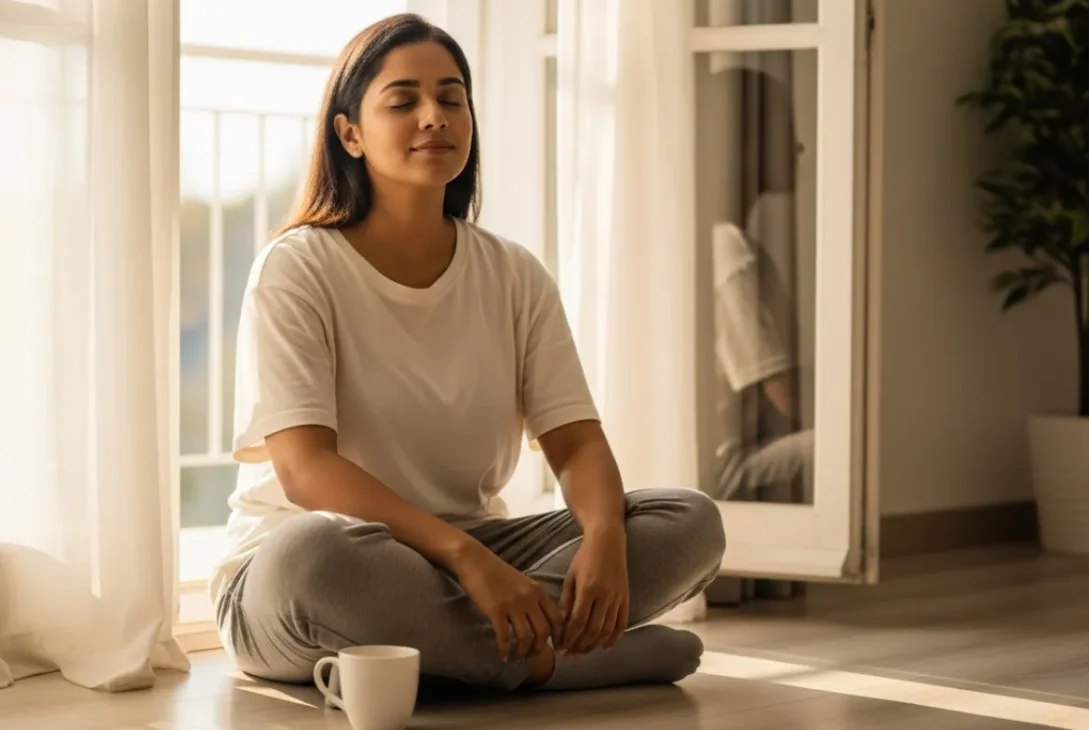
You wake up at 6 AM. Your phone is already buzzing. Your mind starts racing before your feet even touch the floor. Sound familiar?
Most people push through the noise, the pressure, and the exhaustion all while quietly falling apart on the inside. What if one simple shift in your daily routine could actually change that? What if a self care activity something as small as five quiet minutes with a cup of tea could be the thing that saves your mental health?
It can. And science backs this up.
This article breaks down exactly how a self care activity supports your mental health, which ones work best, and how you can build a real routine even when life feels overwhelming.
What Is a Self Care Activity, Really?
A self care activity is any intentional action you take to protect, restore, or improve your mental, emotional, or physical well-being. It is not about bubble baths and scented candles (though those count too). It is about making time for yourself on purpose not by accident.
Think of it this way: your mind is like a phone battery. Every stress, every argument, every sleepless night drains that battery. A self care activity is the charger. Without it, you shut down.
According to the World Health Organization, self care is important because it promotes mental and physical health, prevents disease, and helps people cope with illness more effectively. That is not a small claim. That is a life-changing one.
Why Your Mental Health Needs a Self Care Activity (More Than You Think)
Here is something most people do not realize: ignoring self care does not just make you feel tired. It rewires your brain.
Chronic stress the kind that builds when you never pause raises cortisol levels in your body. High cortisol, over time, damages the hippocampus, the part of your brain responsible for memory and emotional regulation. In plain terms: unmanaged stress can literally shrink the thinking part of your brain.
A regular self care interrupts that cycle. It lowers cortisol. It boosts serotonin and dopamine the brain chemicals that make you feel good, motivated, and calm. And it builds something called psychological resilience, which is your ability to bounce back after hard times.
Research consistently shows that people who practice regular self care report:
- Lower levels of anxiety and depression
- Better sleep quality
- Stronger relationships
- Higher self-esteem
- Greater sense of life satisfaction
One study found that even five minutes of controlled breathing one of the simplest self care activities available can lower cortisol levels measurably. Five minutes. That is less time than most people spend scrolling social media after waking up.
The 5 Types of Self Care Activity (And How Each One Helps)
Not all self care activities are the same. They work on different parts of your well-being. Here is a simple breakdown:
| Type | What It Does | Examples |
|---|---|---|
| Physical | Restores energy, regulates mood | Exercise, sleep, eating well |
| Emotional | Processes feelings, reduces overwhelm | Journaling, therapy, crying |
| Mental | Builds focus, reduces anxiety | Reading, mindfulness, learning |
| Social | Reduces loneliness, builds support | Calling a friend, setting limits |
| Spiritual | Builds purpose, reduces existential stress | Meditation, gratitude, nature walks |
Each type of self care activity feeds a different need. When one area is neglected, the others feel it too. That is why a balanced approach always works better than relying on just one habit.
The Most Powerful Self Care Activities for Mental Health

1. Mindful Breathing
This is the most underrated self care activity in existence. You can do it anywhere. You need zero equipment. And it works within minutes.
Mindful breathing means focusing on your breath in through the nose, out through the mouth and bringing your attention back every time your mind wanders. That simple act of returning your focus is what rewires your stress response over time.
Try this right now:
- Breathe in for 4 counts
- Hold for 4 counts
- Breathe out for 4 counts
- Hold for 4 counts
Repeat four times. Notice how your shoulders drop. That is your nervous system shifting out of fight-or-flight mode.
You can learn more about how this connects to your overall mental health in this guide on mindfulness, stress, and mental health.
2. Journaling
Writing about your thoughts and feelings is one of the most evidence-supported self care activities for emotional health. It creates what psychologists call “cognitive distance”
a space between you and your thoughts, so they stop running you.
Think of it like unclogging a drain. All those thoughts are backed up in your head. Journaling lets them flow out so you can actually breathe again.
You do not need to write beautifully. You do not even need to write in complete sentences. Try this simple daily journaling habit:
Step 1: Write three things that are stressing you out right now.
Step 2: Write one thing you are grateful for.
Step 3: Write one kind thing you would say to a friend who was going through what you are going through then say it to yourself.
That last step is what therapists call self compassion, and it is one of the most powerful mental health tools available to you for free.
3. Physical Movement
Exercise is one of the most well-researched self care activities when it comes to mental health. It releases endorphins your body’s natural mood lifters. It reduces cortisol. It improves sleep. And it gives you something none of your thoughts can take away: a sense that your body is capable.
You do not need a gym. A 20-minute walk outside does the job. In fact, walking in nature specifically has been shown to reduce rumination the kind of repetitive negative thinking that fuels anxiety and depression.
The connection between moving your body and healing your mind is explored in depth in this piece on boosting mental wellbeing through physical health.
4. Quality Sleep as a Self Care Activity
Sleep is not passive. It is one of the most active self care activities your body performs every single night. During sleep, your brain processes emotions, clears out toxins, consolidates memories, and resets your stress response.
Cutting sleep short even by one or two hours increases anxiety, impairs judgment, and makes everything feel harder than it needs to be.
A simple sleep hygiene routine:
- Put your phone away 30 minutes before bed
- Keep your bedroom cool and dark
- Go to bed at the same time each night, even on weekends
- Avoid caffeine after 2 PM
This is not luxury. This is maintenance. Your mind needs it.
5. Digital Detox
Here is one that most people resist until they try it.
Stepping away from your phone, social media, and screens for even a few hours is one of the most refreshing self care activities you can practice. Constant digital input keeps your nervous system in a low-grade state of alert. The pings, the notifications, the endless scroll they all eat into your mental bandwidth.
A digital detox gives your brain space to actually rest and reset. And rest, as it turns out, is where creativity, calm, and clarity are born.
Find out more about why unplugging matters in this detailed breakdown of digital detox and mental health.
6. Practicing Self-Compassion
Here is an honest question: Would you talk to your best friend the way you talk to yourself?
Most people say no. Most people are far more critical of themselves than they would ever be of someone they love. That inner critic is not motivating you it is exhausting you.
A self care activity grounded in self-compassion means treating yourself with the same patience, understanding, and warmth you would give someone else in your exact situation. Research by Dr. Kristin Neff shows that self-compassion is more effective than self-criticism for building resilience, improving motivation, and reducing anxiety.
This is a practice, not a personality trait. You get better at it by doing it one gentle moment at a time.
7. Social Connection
Humans are wired for connection. Loneliness is not just unpleasant it is a real threat to mental health, shown to increase the risk of anxiety, depression, and even cognitive decline.
A self care activity that brings you closer to people you trust a phone call, a shared meal, a walk with a friend does something that no amount of solo self care can fully replace. It reminds you that you are seen, valued, and not alone.
If social anxiety makes connection feel hard, start small. A text message counts. A quick catch-up counts. Progress, not perfection.
How to Build a Self Care Activity Routine That Actually Sticks
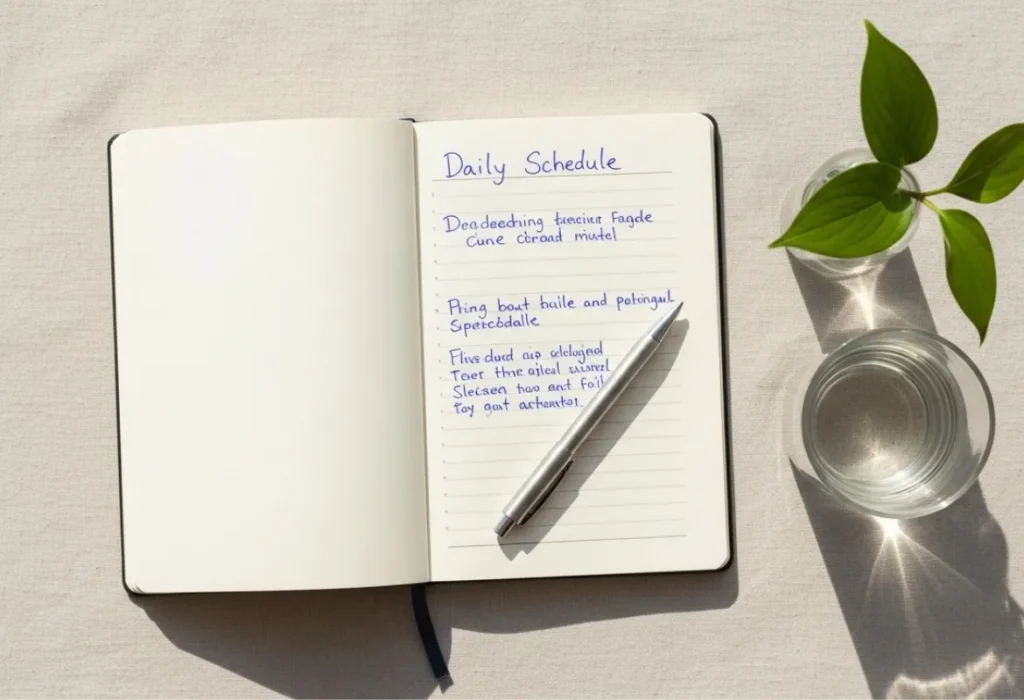
Most people try to overhaul their entire lives at once and then quit within two weeks. Here is a smarter approach:
Step 1: Start with 10 minutes a day. Choose one self care activity and protect 10 minutes for it. Morning works best for most people before the demands of the day take over.
Step 2: Anchor it to something you already do. Habit science shows that new habits stick when they are attached to existing ones. Meditate right after you brush your teeth. Journal with your morning coffee. Walk right after lunch.
Step 3: Remove the friction. Put your journal on your pillow. Keep your walking shoes by the door. Make the right choice the easy choice.
Step 4: Track it, but gently. A simple checkmark on a calendar creates momentum. But if you miss a day, do not punish yourself. Just start again the next day. Missing one day is not failure. Missing every day for a week is a signal to reassess.
Step 5: Expand gradually. Once your 10 minutes feels natural, add another five. Then another habit. Within 90 days, your self care activity routine will feel less like discipline and more like something you actually want to do.
For practical daily habits that support this kind of growth, this article on 5 daily habits for a healthy mindset offers a great starting point.
Signs You Are Not Getting Enough Self Care
Sometimes people do not realize they are running on empty until they crash. Watch for these warning signs:
- You feel irritable for no clear reason
- Small things feel overwhelming
- You have stopped enjoying things you used to love
- You are sleeping too much or not enough
- You feel disconnected from the people around you
- Your body feels tense, tired, or physically unwell more often
These are not character flaws. They are signals. Your mind and body are asking for a self care activity sometimes loudly. Emotional overwhelm, especially when it starts affecting daily life, is something worth paying attention to early. Understanding how stress affects your mental and emotional health can help you recognize where the spiral starts.
Self Care Activity Is Not Selfish
One of the biggest reasons people do not practice self care is guilt. They feel like taking time for themselves means neglecting others.
Here is the truth: you cannot give what you do not have.
When you are depleted, you show up for the people in your life with less patience, less presence, and less genuine care. A self care activity is not a withdrawal from your relationships it is the thing that makes you capable of fully showing up in them.
Taking care of yourself is the most responsible thing you can do for the people who depend on you.
When Self Care Is Not Enough
A self care activity is powerful. But it is not a substitute for professional support when that support is needed.
If you are experiencing persistent sadness, anxiety that interferes with daily life, trauma responses, or thoughts of self-harm, please reach out to a qualified mental health professional. Self care works best as a complement to professional care not a replacement for it.
Knowing when to ask for help is itself an act of self care. There is real strength in recognizing your limits and choosing support over silence.
If you are wondering what professional mental health support actually looks like, this overview of clinical mental health counseling is worth reading.
The Ripple Effect of One Self Care Activity

Sarah was a teacher, a mother of two, and someone who had not slept well in three years. She came across the idea of journaling almost by accident a friend mentioned it offhand. She started with five minutes every morning, writing whatever came to mind, no editing, no pressure.
Within three weeks, she noticed something. She was less reactive. Smaller things stopped feeling like catastrophes. She slept a little better. She started adding a 15-minute walk after school. Then she called her sister for the first time in months.
One self care activity became two. Then three. The ripple went outward.
This is how change actually happens. Not in one dramatic moment. In small, consistent, intentional choices made day after day.
FAQs
[sp_easyaccordion id=”7459″]
Your Mental Health Deserves Intentional Action
Your mental health is not a luxury. It is not something to address when everything else is handled. It is the foundation that makes everything else possible your work, your relationships, your joy, your ability to be present in your own life.
A self care activity is one of the most direct ways to invest in that foundation. Whether it is five minutes of breathing, a page in a journal, a walk outside, or a conversation with someone you trust it all counts. It all matters.
If you are struggling with how your mental health connects to your overall daily routines, or want to understand , those resources are available to help you build on what you have started here.
The science is clear. The stories are real. The only question left is: which self care activity will you start with today?
For a broader perspective on how emotional well-being is being studied and supported globally, the offers research-backed resources grounded in the latest findings.
Start small. Stay consistent. Your mind will thank you for it.