


Have you ever felt like your emotions were a storm you just could not escape? Like anxiety kept waking you up at 3 a.m., or sadness stayed with you so long it started to feel normal? You are not alone. Millions of people carry this kind of weight every single day — and many of them never ask for help because they do not know where to start.
That is exactly where clinical mental health counseling comes in.
This is not about lying on a couch while someone scribbles notes. It is about two people working together — a trained professional and a person ready for change — to face life’s hardest challenges with the right tools. It is real. It is personal. And it works.
What Is Clinical Mental Health Counseling?
Clinical mental health counseling is a structured, evidence-based form of therapy that helps people work through emotional, behavioral, and psychological challenges. Think of it as having a trusted guide who knows the map when you feel completely lost inside your own mind.
A clinical mental health counselor is a licensed professional trained to assess, diagnose, and treat a wide range of mental health conditions — from everyday anxiety and relationship struggles to deeper issues like trauma, depression, and substance use. These professionals combine traditional talk therapy with practical, problem-solving strategies that create real, lasting change.
Unlike psychiatrists, a clinical mental health counselor does not prescribe medication. Instead, they help you build the mental and emotional skills that let you manage life more effectively on your own.
The process is also known as clinical mental health counseling in behavioral health literature because it is grounded in science, clinical standards, and proven therapeutic methods — not guesswork.
Why So Many People Need It Right Now

Consider this: 1 in 5 adults in the United States experiences a mental health condition every year. Yet many people wait years before they ever speak to someone. Why? Because there is still a lot of stigma, a lot of “I should be able to handle this on my own,” and honestly — a lot of confusion about what counseling actually does.
Think about Sarah, a 34-year-old teacher who started experiencing panic attacks before work every morning. She thought it was just stress. She ignored it for two years. When she finally connected with a mental health counselor, she learned that her anxiety had roots in a childhood experience she had never fully processed. Within four months of weekly sessions, she was sleeping better, feeling calmer, and actually enjoying her job again.
Sarah’s story is not unique. It is actually quite common. And that kind of transformation starts the moment someone takes the first step toward clinical mental health counseling.
How Clinical Mental Health Counseling Actually Works
One of the biggest questions people have is: What actually happens in a session?
Here is a simple, step-by-step look at how the process typically unfolds:
Step 1: The First Session (Intake and Assessment)
Your first meeting with a clinical mental health counselor is really about getting to know you. They will ask about your current challenges, your background, and what you are hoping to achieve. This is called an intake assessment.
No judgment. No pressure. Just honest conversation.
This step allows the counselor to understand your emotional and psychological landscape so they can put together a personalized treatment plan that actually fits your life.
Step 2: Goal Setting
Once your counselor has a clear picture of where you are, you will work together to set realistic, meaningful goals. These goals guide every session going forward.
For example, your goal might be to manage social anxiety, process grief, rebuild self-esteem, or break a pattern of self-sabotage that keeps holding you back. The goal-setting stage is where clinical mental health counseling becomes truly yours.
Step 3: Active Therapy Sessions
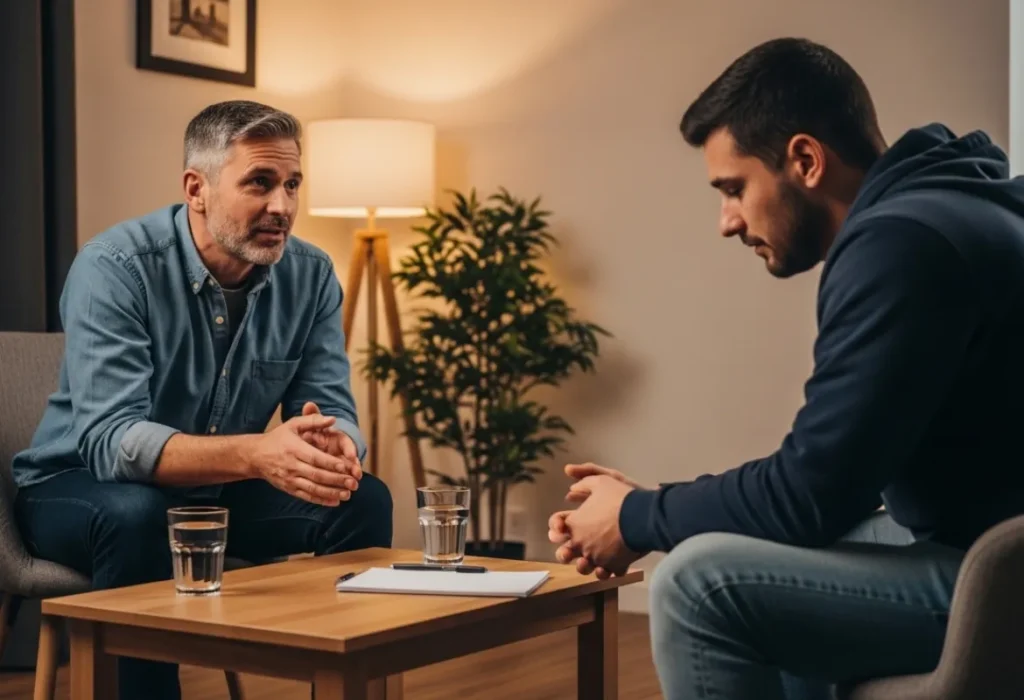
This is where the real work happens. Depending on your needs, your counselor may use different therapeutic approaches. Some of the most effective ones used in clinical mental health counseling include:
| Therapy Type | What It Targets | Best For |
|---|---|---|
| Cognitive Behavioral Therapy (CBT) | Negative thought patterns | Anxiety, depression, OCD |
| Trauma-Focused Therapy | Past trauma and PTSD | Survivors of abuse, accidents, loss |
| Person-Centered Therapy | Self-worth and personal growth | Low self-esteem, identity issues |
| Solution-Focused Therapy | Immediate, practical change | Life transitions, stress |
| Psychodynamic Therapy | Deep emotional patterns | Chronic relationship issues |
Each approach is chosen based on what you actually need — not a one-size-fits-all formula.
Step 4: Developing Coping Skills
A major part of clinical mental health counseling is teaching you practical coping skills you can use in real life. These might include breathing techniques for anxiety, communication strategies for relationships, or grounding exercises for overwhelming emotions.
These tools are yours to keep. They work whether you are in a session or standing in a grocery store feeling your heart start to race. Learning how stress affects your mental and emotional health is a big part of this process.
Step 5: Monitoring Progress and Adjusting the Plan
Good counselors check in regularly. As you grow, your needs change — and your treatment plan should, too. Progress is reviewed, goals are updated, and strategies are refined.
This is an ongoing, collaborative relationship — not a passive one.
Step 6: Closure and Continued Well-Being
When you have reached your goals, your counselor will help you wrap up in a healthy way. This is sometimes called termination in clinical language, but it is really a graduation. You leave with a stronger sense of self, a toolkit of skills, and the confidence to keep moving forward.
What Conditions Does Clinical Mental Health Counseling Address?
Clinical mental health counseling is designed to help with a wide range of mental health conditions and life challenges. These include:
Mood and Anxiety Disorders
Depression, generalized anxiety disorder, panic disorder, social anxiety, and bipolar disorder are commonly treated through structured counseling.
Trauma and PTSD
Many people carry experiences they have never been able to talk through. A skilled mental health counselor creates a safe space to process those experiences without being overwhelmed by them.
Relationship and Family Issues
Communication breakdowns, grief, divorce, and parenting stress are all areas where counseling offers real, practical support.
Substance Use and Addiction
Clinical mental health counseling plays a critical role in addiction recovery — helping clients understand the root causes of substance use and build a healthier lifestyle.
Life Transitions
Starting college, changing careers, losing a loved one, becoming a parent — even positive changes can feel destabilizing. Counseling helps you move through these moments with more clarity.
Staying on top of daily habits for a healthy mindset becomes much easier when you have professional support helping you build those habits at the foundation level.
The Real Benefits of Clinical Mental Health Counseling
Here is something that does not get said enough: seeking counseling is a sign of strength, not weakness. It means you are willing to do the work that most people avoid.
When it is done well, clinical mental health counseling produces outcomes that touch every area of your life:
Emotional regulation
You stop feeling controlled by your emotions and start responding to life instead of reacting to it. This connects directly to understanding emotional well-being at a deeper level.
Better relationships
When you understand yourself more clearly, you communicate better — at home, at work, and in every area of your life.
Reduced symptoms
Anxiety quiets down. Depression lifts. Sleep improves. These are not small things. These changes make life feel livable again.
Increased self-awareness
You begin to see patterns in your thinking and behavior that were invisible before. That awareness is the beginning of real, lasting change.
Resilience
Life will always have hard seasons. But after going through clinical mental health counseling, you face those seasons with tools you did not have before.
Research consistently shows that approximately 80% of people who engage in counseling experience meaningful improvement. That is a remarkable outcome by any standard.
Who Is a Clinical Mental Health Counselor?
A clinical mental health counselor is a licensed professional who holds at minimum a master’s degree in counseling or a closely related field. They are trained in psychotherapy, psychological assessment, diagnosis, and evidence-based treatment.
To become licensed, a mental health counselor must also complete thousands of hours of supervised clinical experience and pass a national licensing examination. In many states, they are called Licensed Professional Counselors (LPC) or Licensed Mental Health Counselors (LMHC).
This is not a person who simply listens. This is a highly trained professional who understands the science of how the mind works — and how to help it heal.
It is also worth understanding that clinical mental health counselors are different from psychiatrists and psychologists in important ways. Psychiatrists prescribe medication. Psychologists typically hold doctoral degrees and often focus more on psychological testing. Clinical mental health counselors sit at the heart of everyday therapeutic care — accessible, evidence-based, and deeply human in their approach.
How to Find the Right Clinical Mental Health Counselor for You
Finding the right counselor is a personal process. Here are a few things to consider:
Specialization matters
If you are dealing with trauma, look for a counselor who specifically practices trauma-informed care. If your concern is anxiety, find someone experienced with CBT.
The relationship is everything
Research shows that the therapeutic alliance — the quality of trust and connection between a client and their counselor — is one of the strongest predictors of positive outcomes. If the first person you try does not feel right, it is okay to try someone else.
Ask questions
A good counselor welcomes questions. You can ask about their approach, their experience with your specific concerns, and what a typical session looks like.
Consider the format
In-person sessions work well for some people. Others thrive with online counseling, which has become increasingly accessible and effective. Understanding how mental health impacts modern self-care can also help you figure out what kind of support fits your lifestyle.
Be patient with yourself. Progress in clinical mental health counseling is not always linear. Some sessions feel transformative. Others feel slow. Both are part of the process.
What Happens in Group and Family Counseling?
Clinical mental health counseling is not limited to one-on-one sessions.
Group counseling brings together people dealing with similar challenges — grief, addiction recovery, social anxiety — in a structured therapeutic setting. There is something quietly powerful about realizing you are not alone in what you are going through. Groups typically include up to ten participants, with a licensed counselor guiding the process.
Family counseling addresses the dynamics between family members. When one person in a family is struggling, the whole system is often affected. A clinical mental health counselor who specializes in family work helps everyone communicate more effectively and understand each other more deeply.
For parents who notice their child is emotionally overwhelmed, family-based counseling can make a tremendous difference early on — and recognizing the signs that a child is emotionally overwhelmed is an important first step.
The Mind-Body Connection in Mental Health Counseling
One thing that is often overlooked is how deeply physical health is tied to mental health. Clinical mental health counseling increasingly incorporates an understanding of the mind-body connection.
Chronic stress, poor sleep, and physical inactivity do not just hurt your body — they change the way your brain processes emotions. A skilled mental health counselor will often explore these connections with you and may encourage healthy lifestyle practices as part of your overall treatment plan.
This is why boosting mental well-being through physical health is not just wellness advice — it is clinically supported. The body and mind are not separate systems.
Mindfulness as a Tool in Clinical Mental Health Counseling
Mindfulness has moved from a spiritual practice into the clinical mainstream — and for good reason. Research shows that regular mindfulness practice reduces the symptoms of anxiety, depression, and stress.
Many clinical mental health counselors now integrate mindfulness-based strategies into their work. These might include guided breathing, body scanning, or mindful observation of thoughts without judgment.
The goal is not to empty your mind. The goal is to change your relationship with your thoughts so they no longer control you. Learning how mindfulness supports stress and mental health is a powerful complement to formal counseling.
FAQs
[sp_easyaccordion id=”7416″]
Taking the First Step

Here is the honest truth: starting clinical mental health counseling can feel scary. There is vulnerability involved in sitting across from someone and saying, “I am struggling.” But that first step is also one of the most courageous things a person can do.
You do not need to be in crisis to seek counseling. You do not need to have a diagnosis. You can show up simply because you want to understand yourself better, feel more at peace, or break a pattern that has been holding you back.
According to the American Counseling Association, counseling involves a professional relationship that empowers diverse individuals, families, and groups to accomplish mental health, wellness, and personal goals. That word — empowers — matters. Clinical mental health counseling is not about someone fixing you. It is about helping you discover the strength that was always there.
If you have been carrying something heavy, you do not have to carry it alone. The path to healing is not always easy — but with the right support, it is absolutely possible.
For further reading on evidence-based mental health approaches, the American Counseling Association offers extensive resources on professional counseling standards and consumer guidance.