

Stress is a common part of life. It comes up when bills are due, relationships are strained, plans don’t go as planned, or deadlines are coming up. You might think you can take the tension at first. But if it lasts too long, it can slowly harm your mental and emotional health in ways that people don’t often notice right away.
This article explains how strain affects mental and emotional health in simple language, with real-life examples and helpful tips. It also shows how the right kind of help may help people feel calm, balanced, and sure of themselves again.
What is stress, and why does it matter?
When you’re in danger or under strain, your body naturally gets agitated. The American Psychological Association argues that tension arises when people feel unable to fulfill their duties.
A little bit of pressure can be helpful. It can help people learn, work more, or stay awake. However, when pressure is a constant part of life, it stops being useful and begins to impair the mind and emotions.
Strain can be produced by:
- Stress on the job
- Money worries
- Issues with family or friends
- Concerns regarding health
- Life changes a lot
- Over time, these pressures get worse.
A Simple Story: When You Can’t See Stress
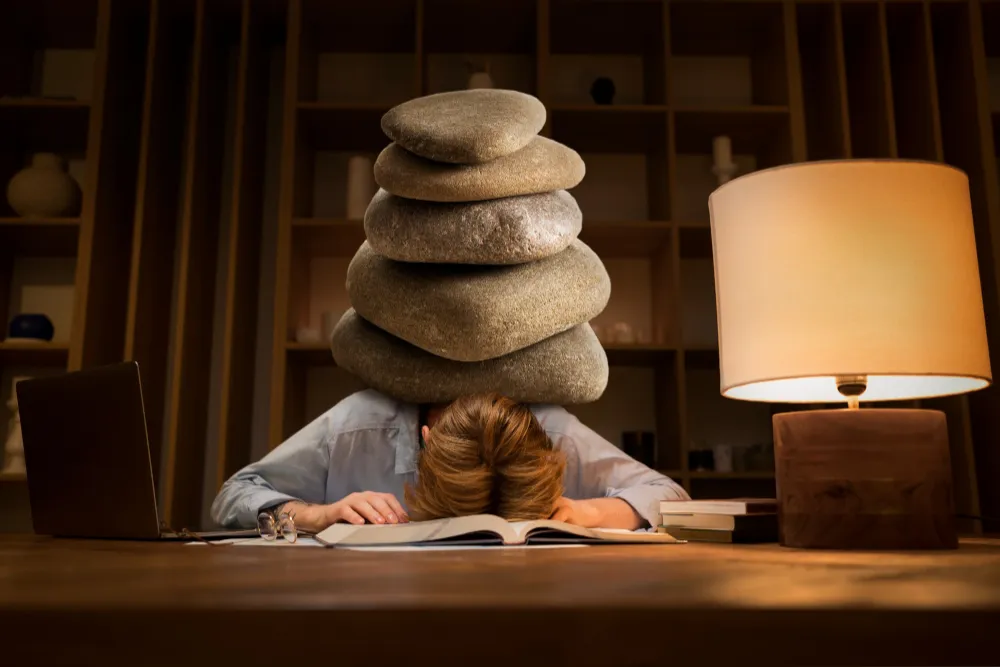
Maria was a college student who had to juggle her schoolwork, her job, and her family responsibilities. She told herself that she was “just busy.” Over time, she started sleeping well, lost interest in things she used to love, and was always on edge.
She didn’t aware that tension that wasn’t handled was bad for her mental and emotional wellbeing at the time. Many people have stories like hers.
How Stress Affects Your Mental Health
When tension lasts for weeks or months, the brain stays in survival mode. Being on watch all the time could lead to a multitude of mental health issues.
1. Worry and stress
Long-term stress is closely related to anxiety. The National Institute of Mental Health warns that stress can make the brain assume that there is danger all around.
Some common signs are:
- Always being worried
- Thoughts that go too fast
- Feeling tight or uneasy
- Panic attacks
Even when everything is fine, the mind keeps on edge.
2. Sadness and stress
Stress might also make you depressed. The NHS warns that stress that lasts a long time makes you more likely to feel hopeless, sad, or emotionally numb.
People may see:
- Not having the drive
- Always feeling tired
- Lack of confidence
- Not being able to have fun in life
Stress drains your emotional energy, which makes it hard to feel good.
3. Stress and Memory Issues
Stress alters the functioning of the brain. Harvard Health says that strain hormones make it hard to recall things and stay focused.
This can cause:
- Forgetting
- Can’t seem to focus
- Mind that is foggy
- Choosing poorly
You can suddenly realize that basic tasks are hard.
How Stress Affects Your Mental Health
Strain in the mind can cause problems with emotions.
1. Too many emotions
When you’re strained, your emotions are stronger and harder to handle. People can become furious, cry, or feel frustrated over small things.
2. Changes in mood
Mental Health America suggests that long-term strain might cause your feelings move up and down. In only a few seconds, people can shift from feeling calm to feeling like they can’t take it anymore.
3. Feeling numb inside
Some people shut off emotionally when they are overwhelmed. They feel that they don’t fit in, are empty, or don’t care. This is how the mind keeps itself safe, but it can make emotional issues worse.
The Strong Connection Between the Mind and Body
Anxiety has an impact on more than just your thoughts and feelings. It also affects the body.
The World Health Organization claims that anxiety might make you feel sick.
Some signs of anxiety in the body are
- Headaches
- Muscle pain
- Digestion problems
- Not enough power
- Sleep problems
This makes things worse: stress makes physical pain greater, and anxiety makes physical symptoms worse.
How Being Mindful Can Help You Handle Stress
To be attentive means to be aware of the present moment without judging it. It gives them a chance to relax and think about how they feel.
According to attentive.org, being attentive might help you deal with your feelings and lessen your stress.
Some of the benefits of being mindful are:
- Thoughts that are more peaceful
- More emotional balance
- Less worry
- More emphasis
- A few minutes a day might help you think more clearly.
A step-by-step guide on how to deal with anxiety better

Step 1: Be aware of the signs of anxiety
Being aware is the first step. Take a moment to think about this:
- Do I still feel tired after taking a break?
- Do I get upset easily about simple things?
- Is my mind always going?
- Realizing that you are strained is the first step to getting better.
Step 2: Take several deep breaths.
Deep breathing tells the body that it is safe. The Cleveland Clinic says that box breathing is a fantastic technique to calm down your nervous system.
Do this:
- Take a deep breath for four seconds.
- Hold it for four seconds.
- Exhale for four seconds.
- Repeat for two to three minutes.
Step 3: Improve your daily behaviors
Routines that work for you are important for your mental and emotional health:
- The Sleep Foundation recommends you should get enough sleep.
- Meals that are well-balanced
- Some light exercise
- Not as much time in front of a screen
You might feel less anxious by making tiny changes every day.
Step 4: Show your feelings in a safe way
You can get rid of emotional strains by talking, writing in a journal, or doing creative tasks. When you keep your feelings to yourself, you feel worse. When you let them out, you feel better.
Step 5: Ask a professional for help
When strain gets too high, it’s important to receive help from a professional. Counseling gives you counsel, understanding, and tips that have worked for other people.
Why Counseling Helps with Anxiety
Counseling teaches people how to deal with anxiety healthily and how anxiety affects them. According to the American Counseling Association, therapy helps people better understand their feelings and handle anxiety better.
Counseling gives you:
- A location where you can be protected and not be judged
- Stress-relieving gadgets
- Help with your feelings
- Mental clarity over time
It keeps people from becoming angry and helps them stay calm.
How getting advice from a professional enhances your confidence
Counseling teaches people how to achieve these things:
- Set healthy limitations
- Take care of bad ideas.
- Get emotionally stronger
- Take charge again
Over time, tension makes it less powerful.
Why You Should Spend Money on Mental Health Care
People typically buy clothes, phones, or things to do that are fun. But mental and emotional health have an effect on every part of life.
Research from Harvard Medical School shows that seeking care for mental health issues improves life, work, and relationships better.
Putting money into help leads to:
- More focus
- Stability in emotions
- Partnerships that work better
- A long time of peace
Who Can Get Help with Stress?
Anxiety support can help with:
- People who are employed
- Parents
- Students
- People who help others
- Anyone who thinks they have too much to do
You don’t need a diagnosis to obtain help. All you need is to want to feel better.
A Last Story of Hope
After months of treatment, Maria learned how to handle anxiety. She slept better, felt better, and started to enjoy life again. Anxiety was still there, but it didn’t control her anymore.
Many people can make this change.
FAQs
How does stress impact relationships with others?
Stress can make people less patient, more irritable, or emotionally distant. This may cause misunderstandings, frequent arguments, or withdrawal from loved ones, even when the person does not intend to hurt relationships or push others away.
Is stress different for children and teenagers?
Yes, stress in children and teens often shows through behavior changes like mood swings, poor focus, or sleep issues. They may not explain feelings clearly, so adults should watch for signs and offer support early.
Can stress lower motivation and productivity?
Ongoing stress can drain energy and reduce motivation. Tasks may feel harder, focus may drop, and confidence can weaken, making people feel stuck or unproductive even when they want to do well.
In the end, you can handle tension.
Strain is a normal part of life, but it may be bad for your mental and emotional health if it lasts for a long period. The first step to changing is to understand how tension affects your mental and emotional health.
Awareness, good habits, mindfulness, and professional support can help people recover their balance, peace of mind, and confidence back.
There is aid out there, and it actually does work.